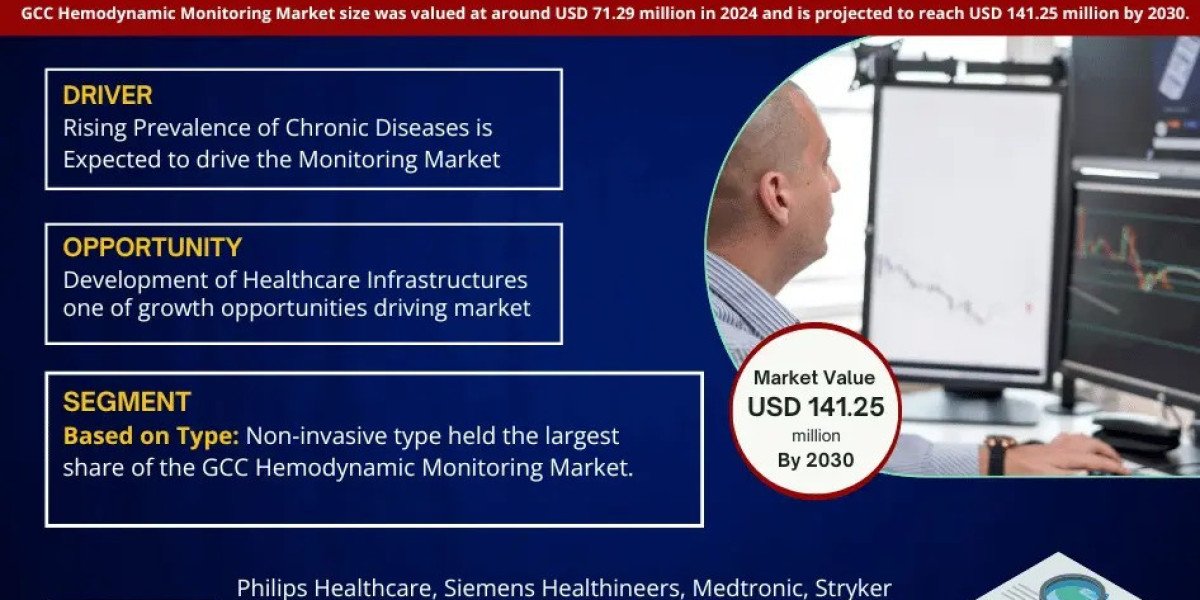

latest study titled GCC Hemodynamic Monitoring Market Research Report: Forecast (2025-2030). This report provides a detailed assessment of the GCC Hemodynamic Monitoring Market, covering its evolving dynamics, emerging trends, key growth drivers, major challenges, and competitive landscape.
Designed to guide investors, stakeholders, and business leaders, the research aims to deliver valuable insights for strategic planning, risk assessment, and investment decision-making in the years ahead.
Market Timeline Overview
- Historical Years: 2020-23
- Base Years: 2024
- Forecast year - 2025-2030
This helps businesses identify emerging opportunities, assess market risks, and develop data-driven strategies for long-term success.
In case you missed it, we are currently revising our reports. Click on the below to get the latest research data with forecast for years 2025 to 2030, including market size, industry trends, and competitive analysis. It wouldn’t take long for the team to deliver the most recent version of the report.
Download a FREE PDF Sample of the Report: https://www.marknteladvisors.com/query/request-sample/gcc-hemodynamic-monitoring-market.html (Discover the market potential, platform-specific insights, and key industry trends.)
GCC Hemodynamic Monitoring Market Outlook
According to the report, The GCC Hemodynamic Monitoring Market size was valued at around USD 71.29 million in 2024 and is projected to reach USD 141.25 million by 2030. Along with this, the market is estimated to grow at a CAGR of around 3.48% during the forecast period, i.e., 2025-30. The GCC Hemodynamic Monitoring Market is poised for robust growth, driven by several key elements. The growing occurrence of cardiovascular diseases, due to lifestyle changes and an aging population, is increasing the demand for powerful monitoring solutions. Technological improvements, especially non-invasive strategies, facilitate real-time data collection without any risk associated with invasive methods.
The report also examines consumer preferences, regulatory impacts, and investment trends that will shape the market’s trajectory over the next decade.
GCC Hemodynamic Monitoring Market Drivers:
Rising Prevalence of Chronic Diseases – The developing occurrence of chronic illnesses specifically diabetes, respiration issues, and cardiovascular conditions is a prime factor driving the growth of the GCC hemodynamic monitoring industry. According to estimates around 34% of deaths are caused by cardiovascular diseases in the Eastern Mediterranean region. In the region, nearly 40% of adults, have high blood pressure, with rates varying between 34% to 48% across different countries among GCC. The Region highlights Bahrain, Kuwait, Saudi Arabia, and the United Arab Emirates as having the highest rates of overweight and obesity, exceeding 70%, especially among women. Additionally, the GCC aging population also contributes to the burden of rising chronic illnesses. Hence the need for advanced monitoring techniques to assess patients’ hemodynamic status in chronic diseases further escalates the demand for sophisticated hemodynamic monitoring devices.
View Full Report (All Data, In One Place): https://www.marknteladvisors.com/research-library/gcc-hemodynamic-monitoring-market.html (Explore in-depth analyses, technological trends, and investment patterns.)
GCC Hemodynamic Monitoring Market Trends:
Integration of Advanced Technologies – The integration of advanced technologies like artificial intelligence (AI), cloud computing, and machine learning creates huge opportunities for the GCC Hemodynamic monitoring industry. Healthcare practitioners could make higher selections and enhance patient results by using AI in hemodynamic tracking structures which additionally enhances data analytics competencies. Large volumes of patient data are analysed in real time by AI and ML algorithms which helps prompt interventions and early identification of possible problems through predictive analytics.
GCC Hemodynamic Monitoring Market Segmentation
The study categorizes the GCC Hemodynamic Monitoring Market into various segments and sub-segments, each analyzed for its size, growth potential, and contribution to the overall industry.
By Type
- Invasive
- Minimally Invasive
- Non-Invasive
By Product
- Disposables
- Monitors
By End User
- Hospitals
- Surgery
- Critical Care
- Ambulatory Surgical Centers
- Homecare Settings
- Others
Geographical Analysis
The report presents detailed insights into the market’s geographical expansion, highlighting key trends and opportunities across the following geographies:
By Country
- The UAE
- Saudi Arabia
- Qatar
- Oman
- Kuwait
- Bahrain
Talk to Our Industry Analyst: https://www.marknteladvisors.com/query/talk-to-our-consultant/gcc-hemodynamic-monitoring-market.html Get personalized insights into company strategies and regional market dynamics.)
Leading Companies in GCC Hemodynamic Monitoring Market Worldwide: Players, Analysis & Future Outlook
Philips Healthcare, Siemens Healthineers, Medtronic, Stryker Corporation, NIHON KOHDEN CORPORATION, Drägerwerk AG & Co. KgaA, FUJIFILM, Omron Healthcare, Honeywell, CardinalHealth, and Others are the top companies in the GCC Hemodynamic Monitoring Market.
Key Highlights of the Report
- Comprehensive Market Overview: In-depth analysis of market size, share, and forecasts from 2025 to 2030.
- Growth Drivers & Challenges: Clear insights into factors feeling or restraining market expansion.
- Investment & Regulatory Insights: Evaluation of key policies, funding trends, and collaborations influencing industry performance.
- Competitive Landscape: Detailed profiles of leading companies, including product portfolios, business strategies, financials, and recent developments such as mergers & acquisitions.
Analytical Tools: Application of SWOT Analysis, PESTEL Analysis, and Porter’s Five Forces Model to assess competition and external influences
Browse through our flexible pricing plans and choose the package that best fits your business needs whether you require a single-user license, corporate access, or customized insights. Once you select the plan that suits your requirements, you can purchase and instantly access the full report online – https://www.marknteladvisors.com/pricing/gcc-hemodynamic-monitoring-market.html
Frequently Asked Questions (FAQ)
1. What is the projected growth rate of the GCC Hemodynamic Monitoring Market?
2. What are the major factors driving this market’s growth?
3. Which regions are expected to lead the GCC Hemodynamic Monitoring Market?
4. Who are the prominent players in the GCC Hemodynamic Monitoring Market?
5. How is the competition structured in this market?
6. How can I access the full report?
Others Reports:
- https://johnryanwork0.wixsite.com/future-trends-market/post/future-trends-of-alcoholic-drinks-market-europe
- https://futuremarketanalysiss.blogspot.com/2025/12/fruits-vegetables-market-gcc.html
- https://medium.com/@johnryanwork0/how-north-americas-alcoholic-drinks-market-is-being-redefined-8e4e9896fde9
- http://prsync.com/markntel-advisors/turkey-food-logistics-market-growth-trends--forecast---insights-4974870/
About Us
MarkNtel Advisors is a globally recognized market research and consulting firm delivering intelligence across the healthcare industry, spanning pharmaceuticals, medical devices, healthcare IT, and biotechnology. Our analysts combine domain expertise with innovation tracking to help healthcare organizations improve efficiency and patient outcomes. Through Consulting Services, we assist clients in interpreting insights, designing go-to-market strategies, and adapting to regulatory changes, fostering sustainable growth in the evolving global healthcare ecosystem.
Reach Us:
MarkNtel Advisors
Sector 63, Noida, Uttar Pradesh-201301, India
Contact No: +91 8719999009
Email: sales@marknteladvisors.com
Website: https://www.marknteladvisors.com
We’re always open to sharing insights, exploring ideas. Follow us to stay updated on the latest news and industry trends.